

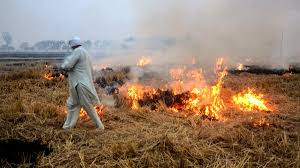
Recent research indicates that relying solely on fire counts to track stubble burning in Punjab and Haryana may give an inaccurate picture of the ground reality. The Environment Ministry has repeatedly claimed that fire counts, derived from satellite data of active fires, dropped by 92% in Punjab and 90% in Haryana since 2021. These figures have been presented as proof of the effectiveness of government measures to curb stubble burning in the two states.
However, a study by the research organization iForest, which analyzed multiple satellite datasets, paints a different scenario. While fire counts suggest a sharp decline, burnt-area measurements show only a 30% reduction in stubble burning. This discrepancy highlights the limitations of using fire counts as the sole indicator for assessing the environmental impact of agricultural residue burning.
Accurate monitoring of stubble burning is crucial because it significantly contributes to seasonal air pollution, respiratory health risks, and environmental degradation in North India. Experts emphasize that relying exclusively on fire counts may overstate government success, and integrating burnt-area data provides a more realistic measure of stubble burning.
Effective policies to reduce stubble burning should consider both fire count and burnt-area measurements, enabling authorities to implement targeted interventions, improve air quality, and support sustainable agricultural practices. Addressing the gap between reported data and actual burning is vital for environmental protection, public health, and long-term climate goals.


